
“Can You Spell That Again?” Learning To Communicate Beyond Words
By Savannah Matola | Float Direct Care Professional at ACR and Arthur's Senior Care | UMN On-Campus Recruiter (OCR)
Before I started working at ACR Homes, I never really thought twice about how much we rely on verbal communication in our everyday lives. Whether it’s asking someone a question, telling a story, or simply explaining what we need, talking is something most of us do without even thinking about it. But what happens when someone can’t communicate that way at all?
One of the biggest things I’ve learned as a Float Direct Care Professional (DCP) at ACR Homes is that communication looks different for everyone, and it doesn’t always involve speaking. Sometimes, communication happens through facial expressions, hand movements, changes in mood, or even the little ways someone reacts to what’s happening around them. As a float DCP, I pick up shifts at different homes rather than being stationed at one, and work with residents who all have their own personalities, routines, and ways of communicating. Because of this, I’ve had to learn how to adjust the way I communicate depending on who I’m working with, and it’s taught me a lot more than I expected.
Learning to Communicate in a Different Way
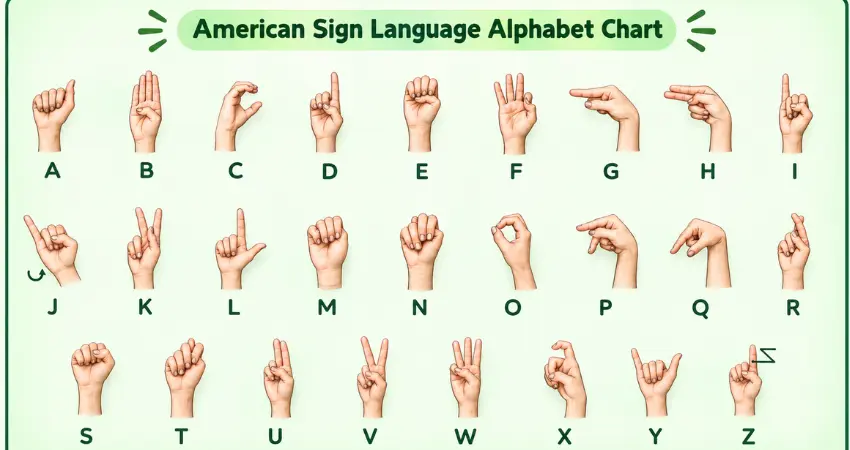
When I first started picking up shifts at different houses, I met a resident who communicates primarily through finger-spelling with her left hand. I had never experienced this form of communication before, and I quickly realized it was going to take some time to get used to.
At first, I really struggled to understand what she was spelling. I would catch a few letters, completely miss the next ones, and then have to ask her to start over. When she was spelling longer words, I would get so focused on figuring out the next letter that I’d completely forget the ones she had already spelled. It was frustrating for both of us because she was trying to tell me something, I genuinely wanted to understand her and help her get what she needed, but I had a hard time.
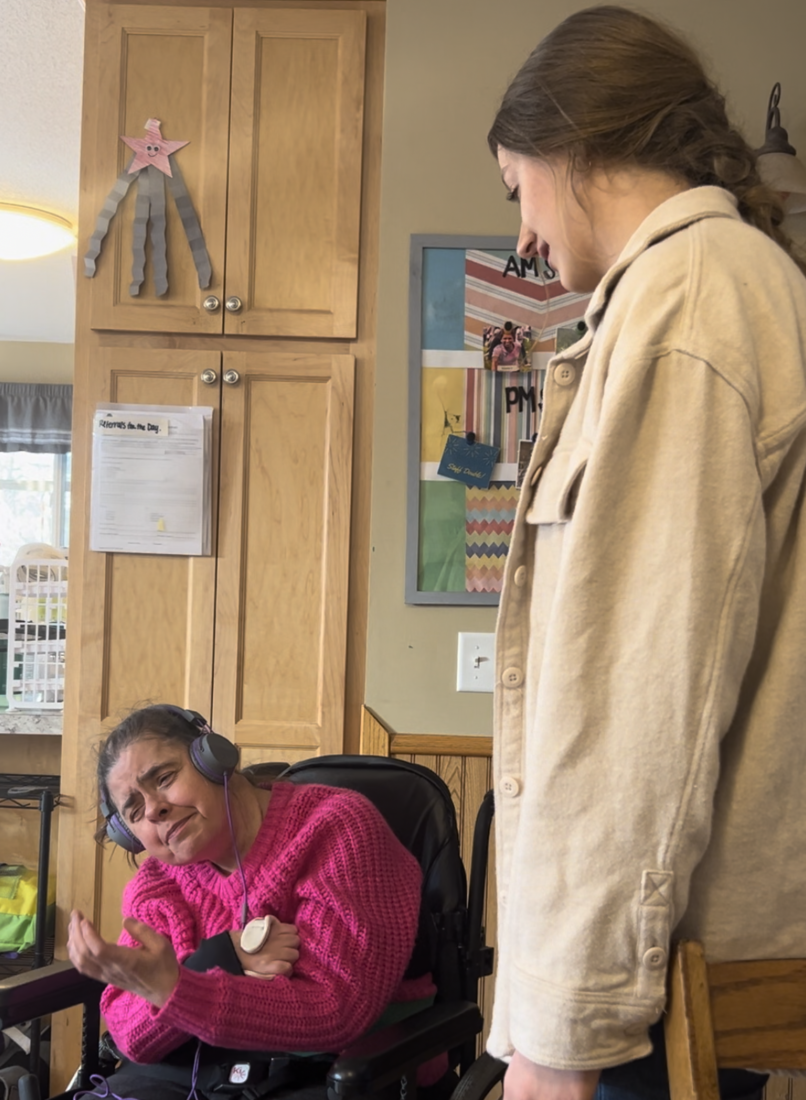
I specifically remember one of my first shifts with her, when she was trying to ask me for hand sanitizer, and I just couldn’t figure out what she was spelling. I kept asking her to spell it again, and I felt terrible. I remember thinking about how something as simple as asking for hand sanitizer had turned into such a struggle for both of us.
Being a float DCP made learning to communicate with her a little more challenging because I wasn’t working with her every shift. I would only pick up shifts at her house about once every other week, so I didn’t get to practice as often as I would have liked. But over time, it started getting easier. I began to recognize how she formed certain letters and pick up on words more quickly, sometimes before she even finished spelling them.
It might seem like a small accomplishment, but for me, it was a big deal. It made me realize how much learning to communicate with someone in their own way can build trust. What made it even more rewarding was noticing that she was becoming more comfortable with me, too. As our communication improved, I could tell that we were growing closer with each shift.

Making Sure Every Voice Is Heard
One thing I never really thought about before working at ACR Homes was how much communication has to do with someone’s independence. Most of us don’t think twice about being able to tell someone what we want, what we need, or even what we don’t want.
Imagine knowing exactly what you’re trying to say but having to repeat yourself over and over because the person you’re talking to just isn’t understanding you. I know I would get frustrated, especially if it was something as simple as deciding what I wanted to eat or how I wanted something done. I can only imagine how much more frustrating it would be if I were uncomfortable or needed help with something and couldn’t get anyone to understand me.
Working with residents who communicate in different ways has made me realize how important it is to give people the time and opportunity to express themselves. Just because it takes someone a little longer to communicate doesn’t mean we should assume we know what they want or make decisions for them. I’ve also learned that my job isn’t just about figuring out what someone needs and helping them with it. It’s about making sure residents can make their own choices and be as independent as possible. Whether that means choosing what they want to eat, deciding where they want to go on an outing, showing staff what they want to wear, or even telling staff what they don’t want to do, those decisions should be theirs to make.
Lessons I’ll Take With Me Into Healthcare
When I first started working at ACR Homes, one of my biggest goals was to gain more patient care experience because I wanted to pursue a career in medicine. I expected to learn hands-on skills, become more comfortable helping people with their daily needs, and gain experience working with individuals with different disabilities. What I didn’t expect was how much I would learn from everyday interactions that don’t necessarily involve medical care.
Before I started working at ACR Homes, I had experience as a Certified Nursing Assistant (CNA). I remember caring for patients who had experienced strokes and had difficulty speaking or getting their words out. I always tried my best to understand what they were saying, but there were times when it was difficult to figure out exactly what they needed. Looking back, I realize how helpful it would have been to pay more attention to their facial expressions, body language, and other nonverbal cues rather than focusing only on understanding their words. The importance of nonverbal communication is something I’ve become much more aware of since working at ACR Homes.
Being a float DCP has definitely pushed me outside of my comfort zone. Every house is different, and I’ve learned how to adjust to new environments, get to know new residents, and build relationships with people who might not be familiar with me yet. These are experiences I know I’ll carry with me into my future career in healthcare. No matter what area of medicine I end up going into, I’m going to work with people who have different needs, personalities, and ways of communicating. I want to be someone who takes the time to understand my patients rather than just assuming I know what they need.
It’s interesting to think about how intimidating finger-spelling felt when I first started. Now, communicating with her is something I actually look forward to when I pick up shifts at her house. I’m still learning, and there are times when I need her to spell something again. But when I think back to that first conversation about hand sanitizer, it makes me realize how much closer we’ve gotten as I’ve learned to understand her better.
If there’s one thing this job has taught me, it’s that communication isn’t always about having the right words. Sometimes, it’s just about paying attention to details, being patient, and being willing to learn how someone else communicates. And sometimes, it really is as simple as asking, “Can you spell that again?”